
On March 28, Prof. Liliana Colanzi invited me to deliver a lecture in her course, “Anthropophagic Brazil,” at Cornell University. As I’ve been doing for some time now, I combine teaching with the making of an artwork, creating collectively with the students. My pedagogical proposition is that the shared act of making activates a sense of collaboration conducive to deeper learning. The experience of being together physically while creating something with our hands, with the intention of making it an artwork, thickens the cognitive environment, enriching our understanding of the information we acquire. Put simply, we experience knowledge with others rather than internalize it individually. This approach served as the foundation for the session I led at Cornell.
The lecture I prepared for the course was an introduction to the 1967-68 Brazilian Tropicália movement, and I used Prof. Colanzi’s question, “What does it mean for a nation to ‘devour’ the world and reinvent itself?” as a starting point. To connect theory with practice, I brought canvases prepared with casein paint, pastels, and tempera sticks, and proposed that each student would create one part for a flag that I would stitch together after the class. I asked them to paint any image that could — somehow —represent their individuality. Importantly, the painting proposition aligns with the philosophical premise of “Brazilian Anthropophagy”: we can culturally devour, transform, and critically create something new that represents our current reality. Additionally, the precariousness of the materials given to students, coupled with the brevity of our time together and the pressure to invent something that could respond to a deep question, prompted the emergence of creativity necessary to experience such a philosophical premise. In this way, the class not only explored theory but also enacted it through collaboration and art-making.
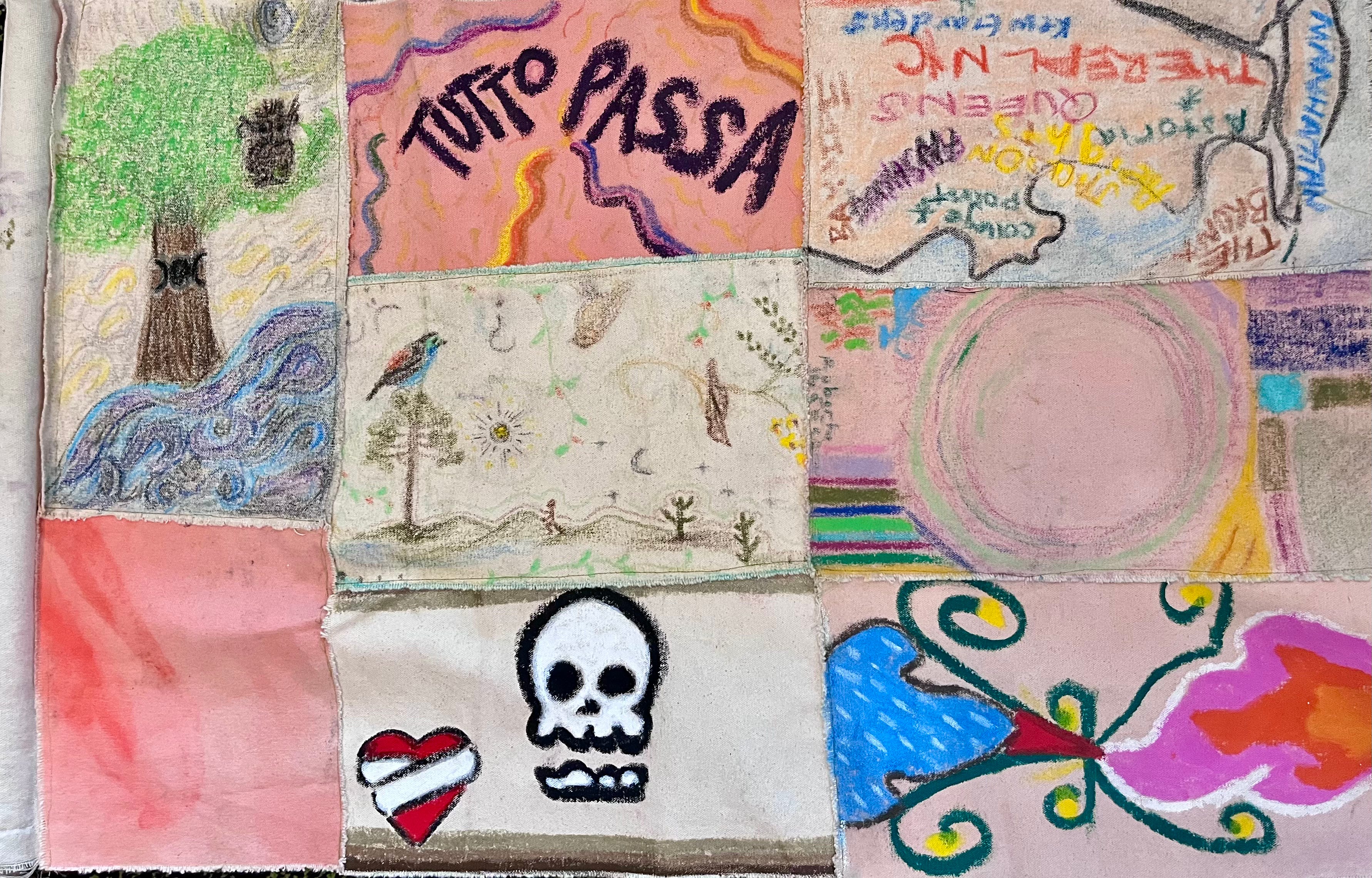
After the class, I took the individual paintings back to my home studio and began assembling the flag. In deciding the position of each painting within the flag format, I meditated on the meaning of each image as shared by the students. On top, I placed an image of a tree representing nature, with an owl on it, which symbolizes knowledge. Next to it, the phrase “Tutto Passa” conveys a message particularly suited to a flag for temporary collectivities and brief encounters. On the right of “Tutto Passa,” we see a map of New York City, centered on Queens as “the real” NYC, an image that at the same time locates the flag’s creation and displaces it with the question of a real territory for a representative culture. I placed the map upside down in reference to Joaquín Torres García. Under the map image, we see a representation of “empty space,” a concept that challenges existence itself, evoking the necessity of making containers for ideas and the always-present potentiality for life. To the left of the image of “empty space,” we again have nature, this time as a dreamy landscape that can be viewed from any direction, with plants, animals, and human life coexisting peacefully. Under this image of nature, we see two emoticons: one representing pain and a healing heart, and the other representing death. To the left of this image, we see water and fire meeting at the center to create life, representing the force and movement of life through elemental materials. To complete the flag, I stitched one canvas with only casein paint, like the ones I gave to students, as a way to include a “blank canvas” or an abstract image that shows painting as the basis for this flag’s creation—the anthropophagic stomach, where all ideas get digested.
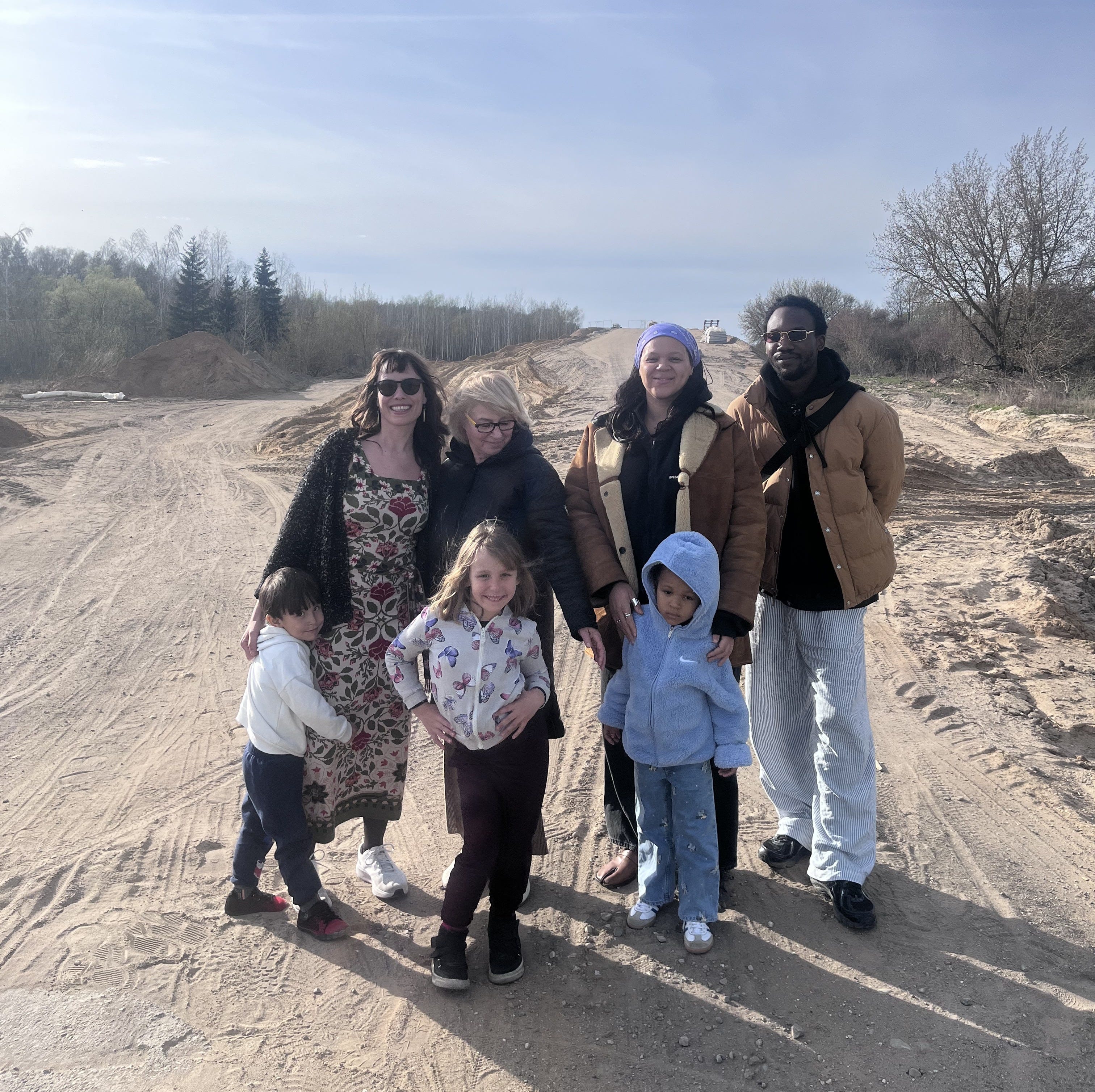
One week after teaching this class and stitching the flag, I traveled with my family from Ithaca (USA) to Łapy (Poland) to visit the city where my husband, Marcin, was born. Here, we met family members from Berlin (Germany) and Lagos (Nigeria), and I felt this was the perfect condition to activate this artwork. In this new context, I have begun to understand art-making as a significant expression of the reality of my life. Furthermore, after becoming a mother, I’ve been interested in how incorporating art-making into everyday, mundane moments facilitates the spontaneous transmission of my life values to my children. I also enjoy the contrast of experiencing art-making with students in the institutional setting of the classroom and with family members in whatever leisurely moment. This difference allows me to notice which parts of the artwork’s history resonate most and are more effective at affecting others and activating the vitality I hope to enhance.
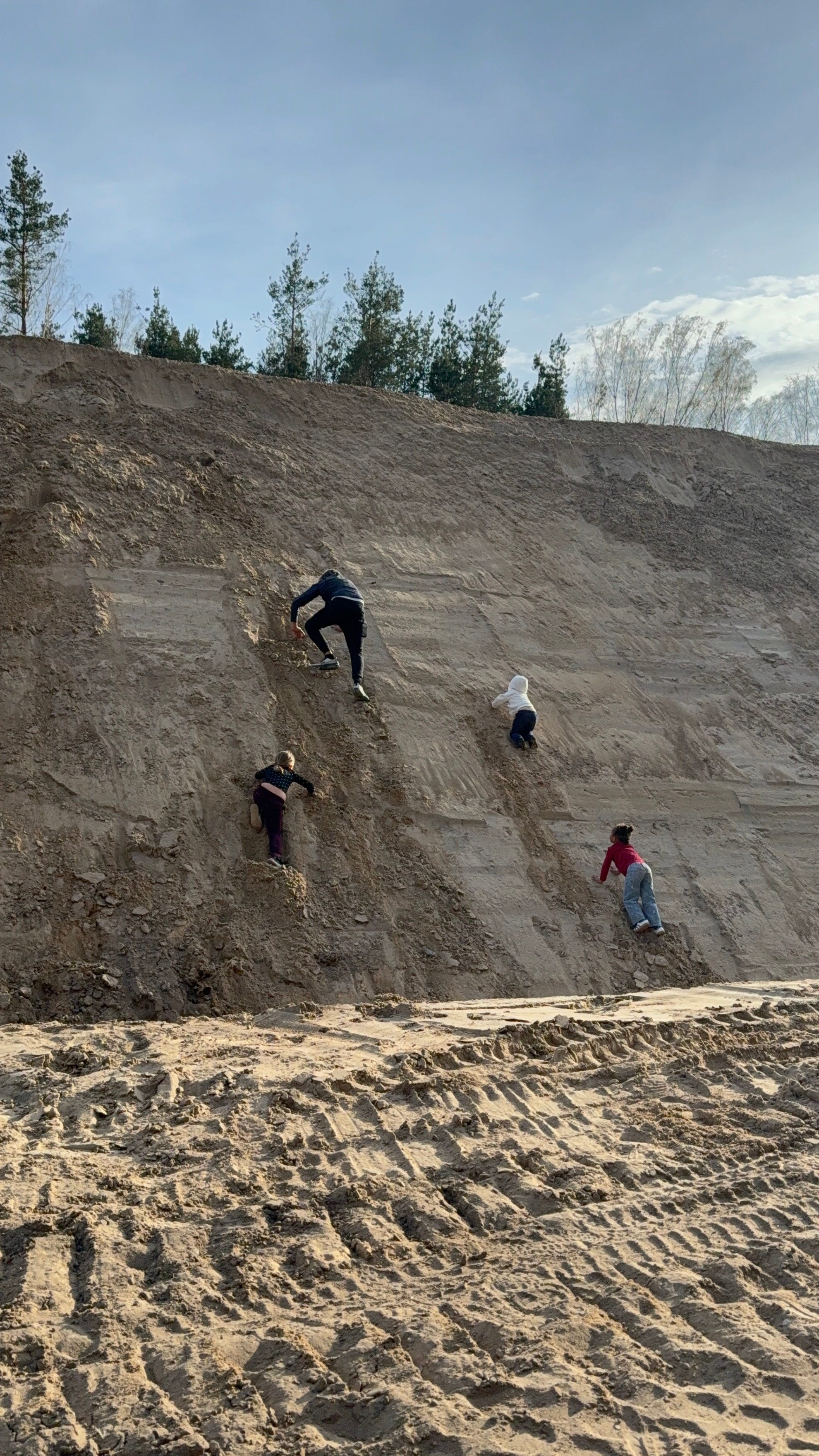
I brought the flag with me when we went for a walk together to see the building of a new road that cuts through the forest that marked Marcin’s childhood. When we first arrived in Łapy this time, we tried to walk along the paths he used to take as a child, only to be interrupted by the big machines and the large piles of sand and mud of construction. I was reminded that the assault of “progress” on nature isn’t happening only in Brazil and countries of the Global South, but is a continuous process in capitalist societies. This experience corroborated the understanding carried by the flag of our displacement from land and the interruption of the continuity between memory and present life, making our lives a stitching of brevity and limited shared realities. After the initial shock of seeing the forest destroyed, we took advantage of the construction pause during the holidays and ignored the prohibitive signs to explore the area. Marcin found a wooden pole for the flag among the construction zone’s garbage piles, and we crossed to the other side of the forest. I asked my niece, Justyna Obassi, to hold the flag for a photo, as I feel she embodies many of the ideas the flag carries: she is an internationally renowned film director who travels the world shooting commercials and short films, creating visually appealing narratives (often about love) with small groups of people.
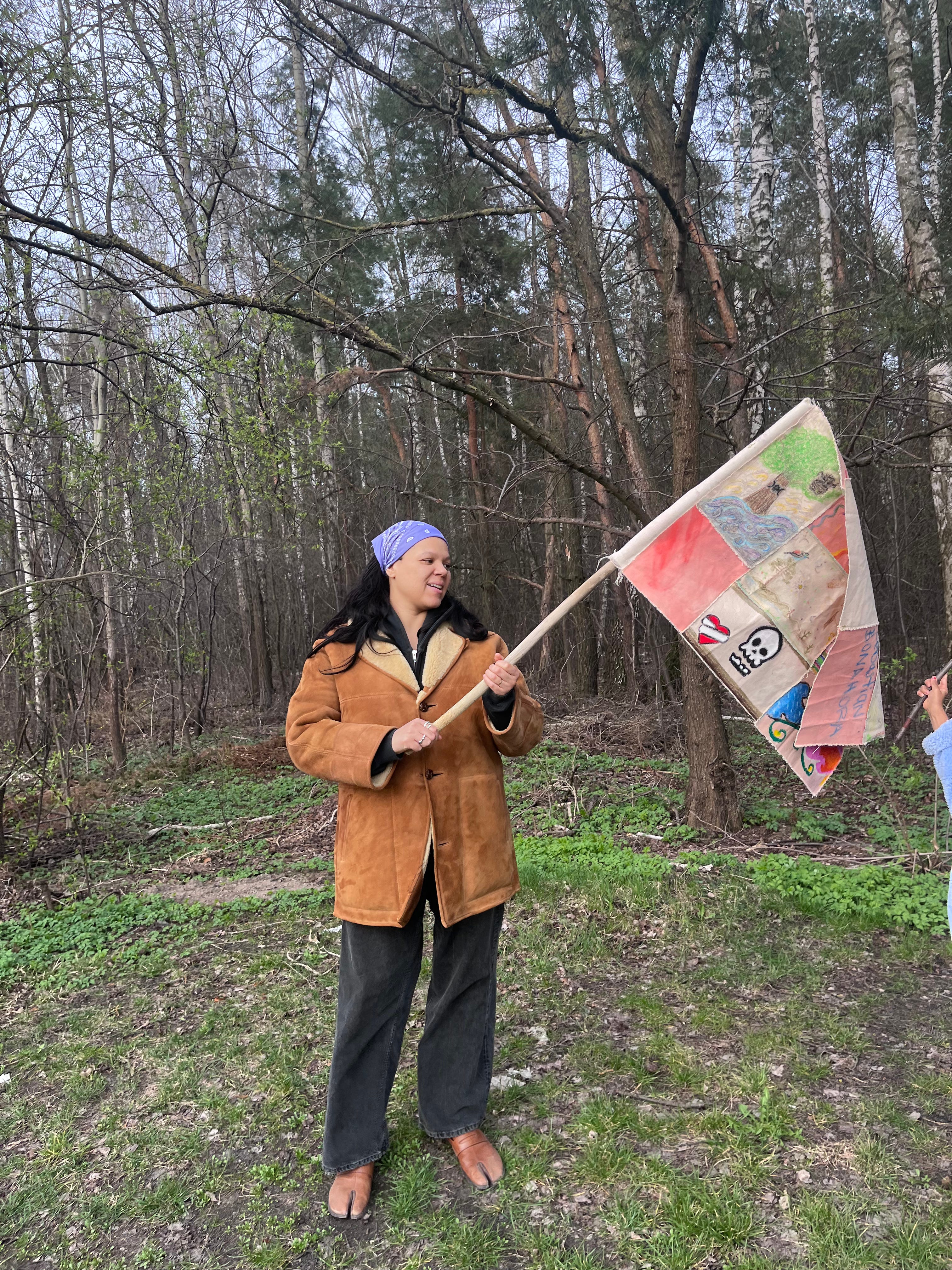
After that, Helena surprised me with her understanding of the flag’s meaning and her excitement to play with it, settling my heart and, to me at this point, closing the experience of making this flag.