
The Continuity of the Real
Helena's first art exhibit
In May 2026, my daughter Helena participated at age six as an artist for the first time in an art show organized by Kathrin Achenbach at the Soil Factory. We were by the lake when Helena called me, announcing that she was making an artwork and needed my phone to take a photograph. She told me that the photograph, which depicted rocks arranged in a particular way, was the actual final artwork. And then she explained: “Mom, you like to make paintings, right? I like photographs more, because I care for what is real. I’m not interested in painting so much anymore. With photography, I can show the actual thing.” (To a certain degree, I paraphrase. But in my memory, this is very close to her actual words)
When Helena said “I care for what is real,” I immediately remembered Achenbach’s call for artworks: “Kathrin Achenbach invites the Soil Factory community to create miniature artworks inspired by the thought-provoking question: 'What do you care about?’ Kathrin explains, "My intention is to explore how, despite our fractured society, we can come together around a shared question." Do you care about your garden, pet, health, climate change, world peace?”
I particularly liked Achenbach’s call for openness to all kinds of artists and for describing the exhibition format in it. In the call, she added instructions: “Format: 3 - 4 inches. Your work will be mounted on paper for display. Process: Explore mentally. Experiment materially. Express hope, fear, ambition, obligation...any form of caring. Have fun.” Achenbach’s call reflected to me the kind of open gates (in sharp contrast to the usual art market gatekeeping) in art-exhibiting that I value. Instead of “juried exhibitions” or “exhibitions by application,” the call was explicit in its intention to include everyone who submitted artworks. It was also a smart format for including each artist's voice beyond the art object and for managing materials in a practical way: dropping off artworks was straightforward for artists, and the size limits allowed for a certain degree of ease in installing the number of works that would be received.
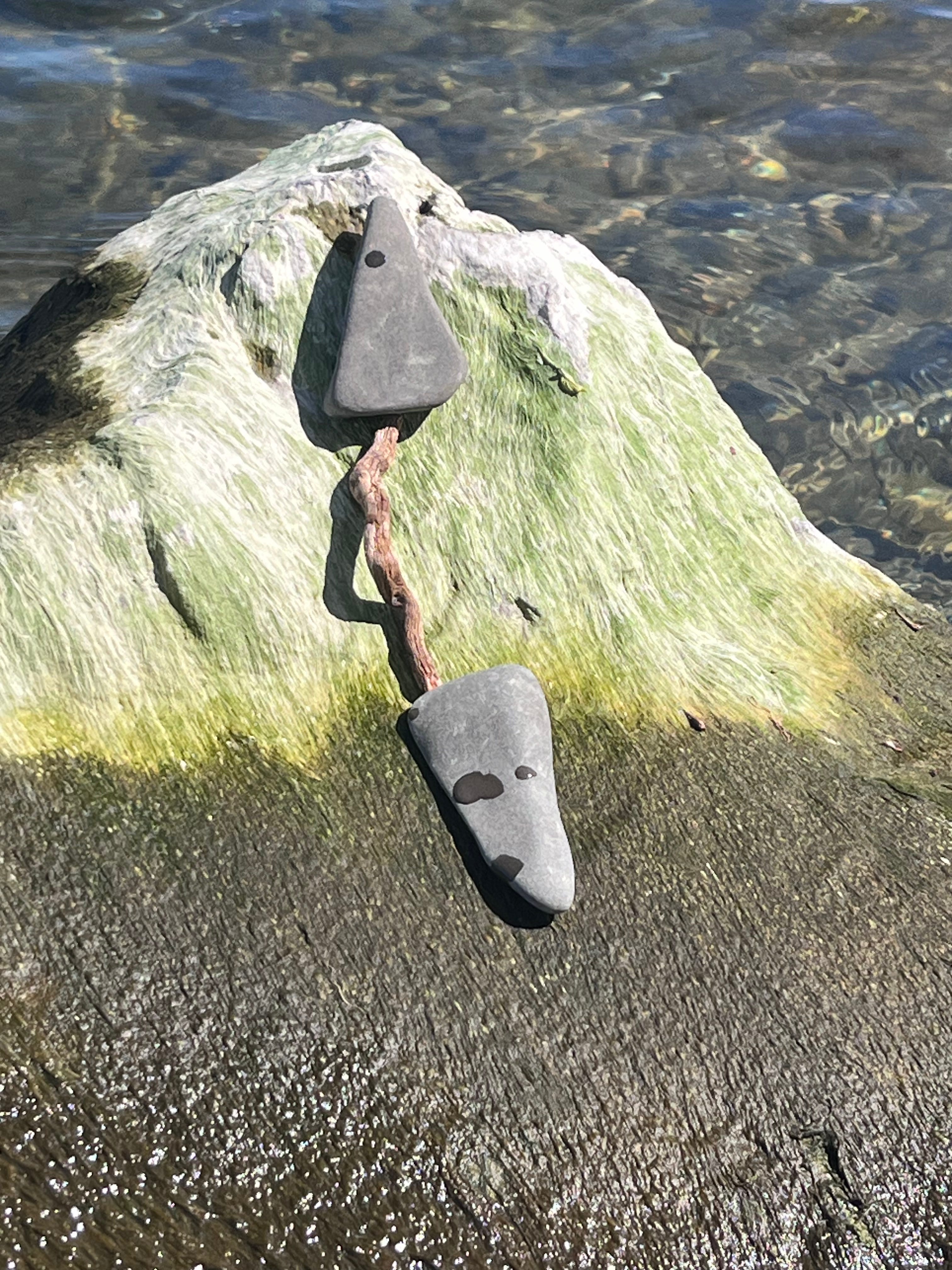
Helena took the picture, and we printed a few copies. We sent copies to her grandparents in Brazil, and I placed one on my altar at home; to me, the image feels like a protective spell, a reminder of an arrow's sharp contours and decisive direction.


The Real never left, so it cannot return.
Around the time Helena created this artwork, I was rereading Hal Foster’s “The Return of the Real,” trying to ground my thinking in his text. I realized that the book is already 30 years old and that Foster wrote it while he was teaching at Cornell University, which might mean that his need to look for the real in artworks was, to a certain degree, impacted by living in Ithaca, NY. The main insight I carried from it, since I first read it in graduate school, was how we understand past art movements through our present-future realities. My introduction to art history was through a professor who studied with Foster, so when I was starting my PhD studies, Foster was a myth-like figure to me. I laughed when I realized that the reality of my life now was such that I was trying to grasp a theoretical “real” while caring for perhaps the most immediate Real that there is: raising children. I kept finding the book in many household situations. Whenever I could, I snapped a picture of it, as they felt like small jokes that I left for myself in my (long, perhaps never-ending) transition between art history and art-making. At some point, I gave up on the idea of creating a clear link between my work at this moment and Foster’s book, as these ideas were delaying my writing for Helena’s exhibition here for too long.

